Sections menu
Boeing 737-800 NG · Type data
Variants & history
Dimensions, development milestones and what changed between each version.
The 737 is the best-selling jetliner family ever. Its low-slung fuselage, derived from the 707/727 cross-section, has shaped every generation.
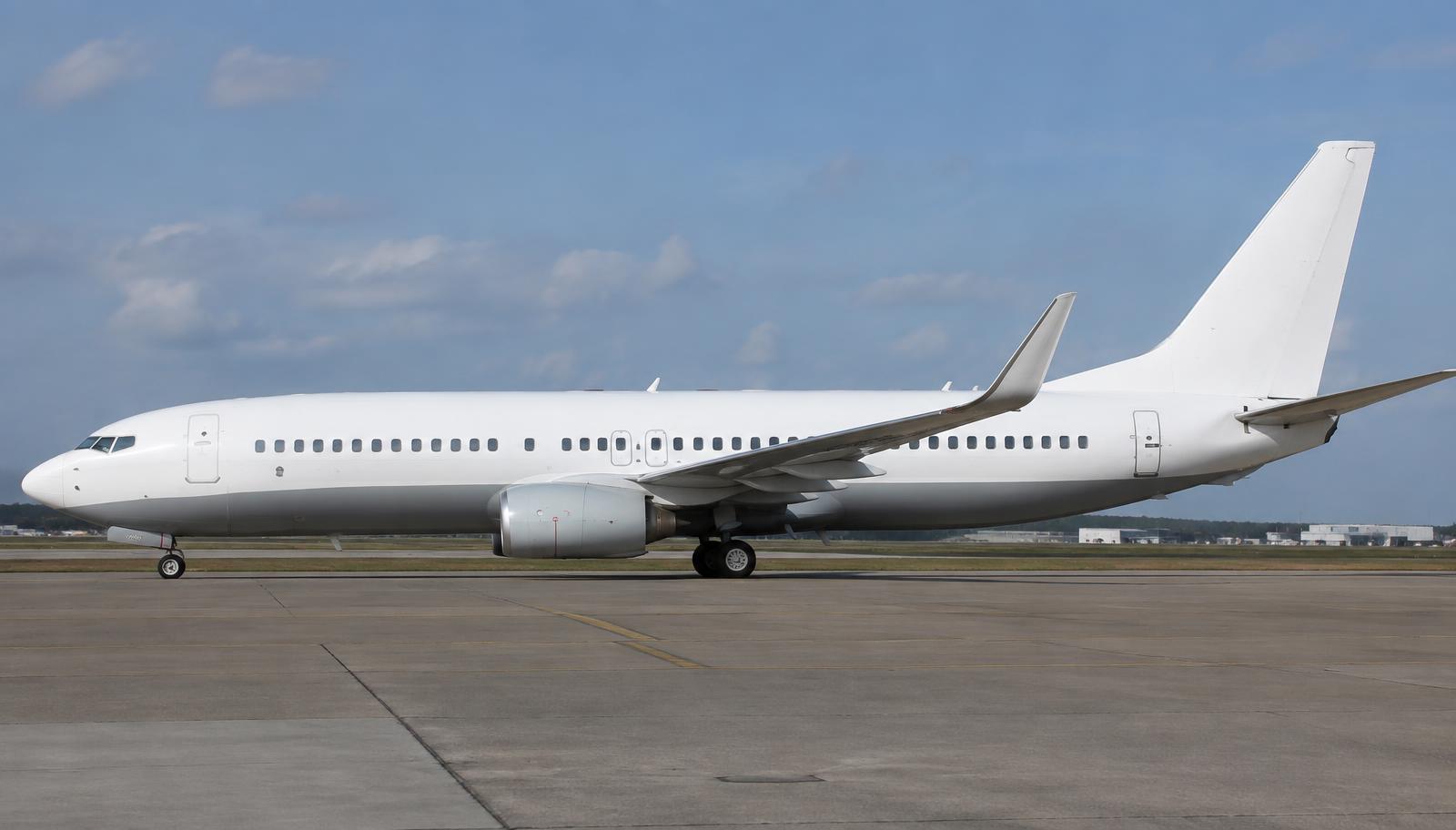
The 'Baby Boeing'
The 737-100 first flew on 9 April 1967, with Lufthansa as the launch customer. The longer 737-200 followed quickly and became the version that sold. Its slim Pratt & Whitney JT8D engines were tucked under the wing, and a gravel kit let it operate from unpaved runways in Alaska and Africa.
The Classic
In the 1980s, the 737-300, -400 and -500 introduced the larger, quieter CFM56 turbofan. Because the 737 sits so low, the engine had to be flattened at the bottom — giving the Classic its famous 'hamster pouch' intakes. Nearly 2,000 Classics were built.
The Next Generation
Facing competition from the A320, Boeing launched the 737 Next Generation (-600, -700, -800, -900) in 1993. A new, larger wing gave longer range and higher cruise speed, and a six-screen glass cockpit replaced the dials. The 737-800 became one of the most successful airliners ever built.
The MAX
When Airbus launched the A320neo in 2010, Boeing chose to update the 737 again rather than design a new aircraft. The 737 MAX received the larger LEAP-1B engine, split-tip winglets and large displays. Fitting the bigger engine changed the aircraft's handling at high angles of attack, which Boeing addressed with MCAS. After two fatal accidents and a long grounding, the MAX returned to service in late 2020.
✓ Verified official data
From the type-certificate data sheet
These figures are checked against free, public documents from the FAA and EASA. Click a source to open it.
| Item | Official value | Source |
|---|---|---|
| Type certificate | FAA A16WE (all 737 models, -100 to MAX) | FAA — Type Certificate Data Sheet A16WE (Boeing 737 series) |
| Approved engines (737-800) | CFM International CFM56-7B series | FAA — Type Certificate Data Sheet A16WE (Boeing 737 series) |
| Max operating speed (VMO) | 340 KIAS | FAA — Type Certificate Data Sheet A16WE (Boeing 737 series) |
| Max operating Mach (MMO) | M0.82 | FAA — Type Certificate Data Sheet A16WE (Boeing 737 series) |
| Max operating altitude | 41,000 ft | FAA — Type Certificate Data Sheet A16WE (Boeing 737 series) |
| 737-800 certification | March 1998 | FAA — Type Certificate Data Sheet A16WE (Boeing 737 series) |
| Minimum flight crew | 2 (pilot and co-pilot) | FAA — Type Certificate Data Sheet A16WE (Boeing 737 series) |
Dimensions & data
| Length (-800) | 39.47 m |
| Wingspan (winglets) | 35.79 m |
| Height | 12.55 m |
| Fuselage width | 3.76 m |
| MTOW (-800) | 79 t✓ FAA |
| Typical seats | 162–189 |
| Range | approx. 2,900 nm |
| MMO | M0.82✓ FAA |
| Ceiling | FL410✓ FAA |
Timeline
- 1967
First flight (737-100).
- 1968
Entry into service with Lufthansa.
- 1968
Entry into service with Lufthansa
- 1984
737 Classic (-300) with CFM56-3.
- 1997
Next Generation (-700) enters service.
- 1998
737-800.
- 2012
10,000th 737 order
- 2017
737 MAX enters service.
- 2019
Worldwide MAX grounding (March)
- 2019–2020
MAX grounding; MCAS redesign.
- 2020
MAX recertified (November)
Variants
| Variant | Years | Engine | Key differences |
|---|---|---|---|
| Original (-100/-200) | 1968–1988 | P&W JT8D | Low-bypass engines under wing. |
| Classic (-300/-400/-500) | 1984–2000 | CFM56-3 | Flattened 'hamster pouch' nacelles. |
| NG (-600/-700/-800/-900) | 1997–present | CFM56-7B | New wing, glass cockpit, higher ceiling. |
| MAX (7/8/9/10) | 2017–present | CFM LEAP-1B | Larger fans, split-tip winglets, MCAS, large displays. |
Approximate figures — verify against the type certificate data sheet and manufacturer data.
EDUCATIONAL USE ONLY. Content is summarised from manufacturer documentation for learning. It is not approved flight or maintenance data. Always use the current, aircraft-specific POH/AFM, FCOM, QRH, AMM and operator procedures.