Sections menu
Lockheed Martin C-130J Super Hercules · Start
About
A plain-language introduction, with no technical detail.
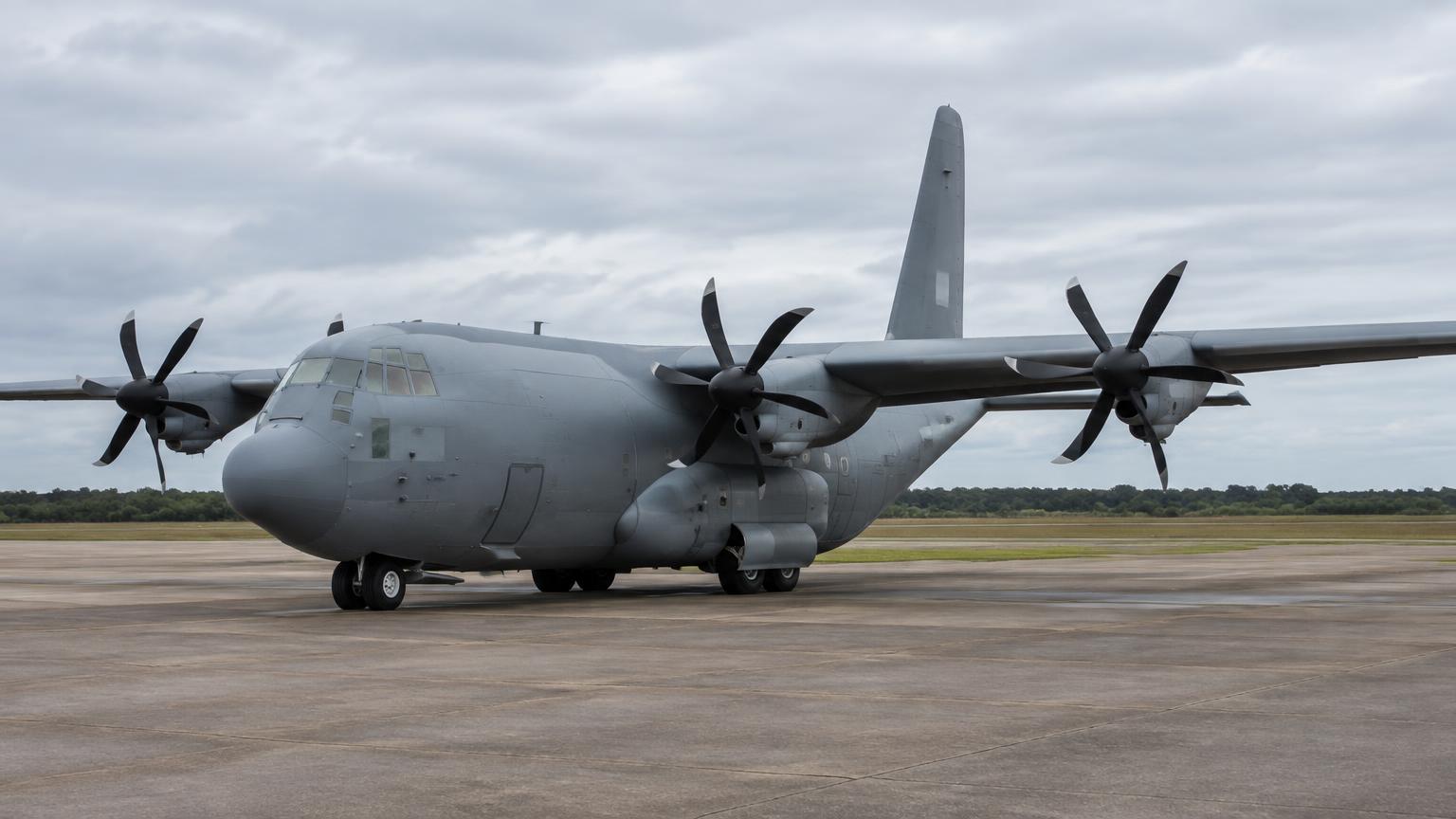
The Lockheed Martin C-130 Hercules is the world's standard military transport aircraft, a four-engine turboprop that can land troops, vehicles and supplies on short, rough runways most jets could never use.
What it is
A four-engine, high-wing turboprop transport flown by dozens of air forces worldwide, carrying troops, vehicles, pallets of cargo or paratroops. The current C-130J Super Hercules has a two-pilot glass cockpit, no longer needing the flight engineer and navigator of older models.
It is built by Lockheed Martin, first flew in 1954, and remains in production today — one of the longest continuous production runs of any aircraft.
Why it is used everywhere
Its high wing, rugged landing gear and powerful turboprops let it operate from short, unpaved or damaged airstrips that airliners and most jets cannot use, bringing supplies directly into disaster zones or forward military airfields.
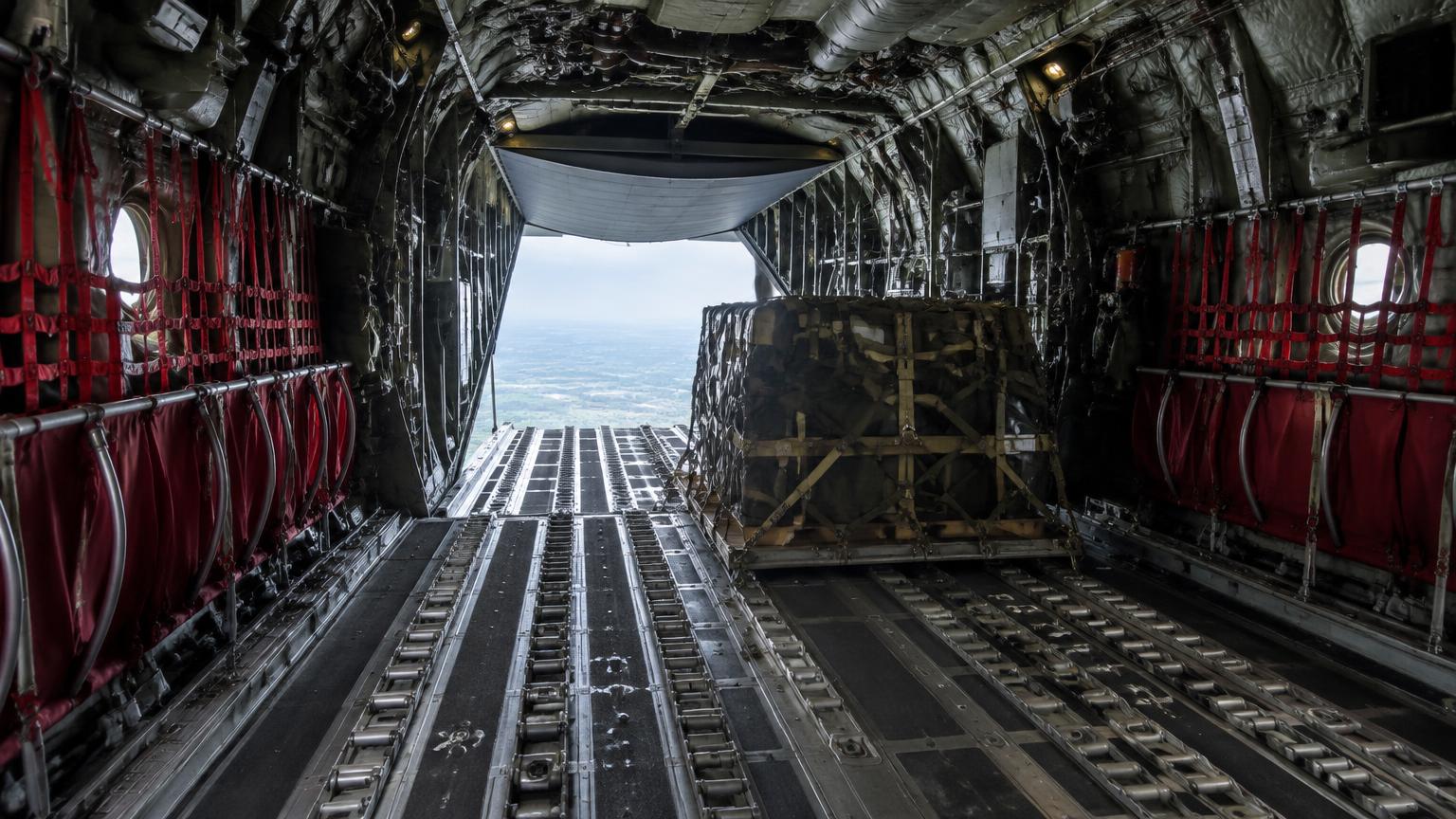
The rear ramp and door let vehicles and pallets drive straight on and off, while paratroop doors on each side let soldiers jump directly from the aircraft.
What it is used for
Military airlift of troops and cargo, paratroop and equipment airdrops, aeromedical evacuation, aerial refuelling (KC-130J), search and rescue and special operations (HC/MC-130J), and even as a commercial freighter (the civil LM-100J). It has also fought wildfires and delivered humanitarian aid after disasters.
What it is like to fly
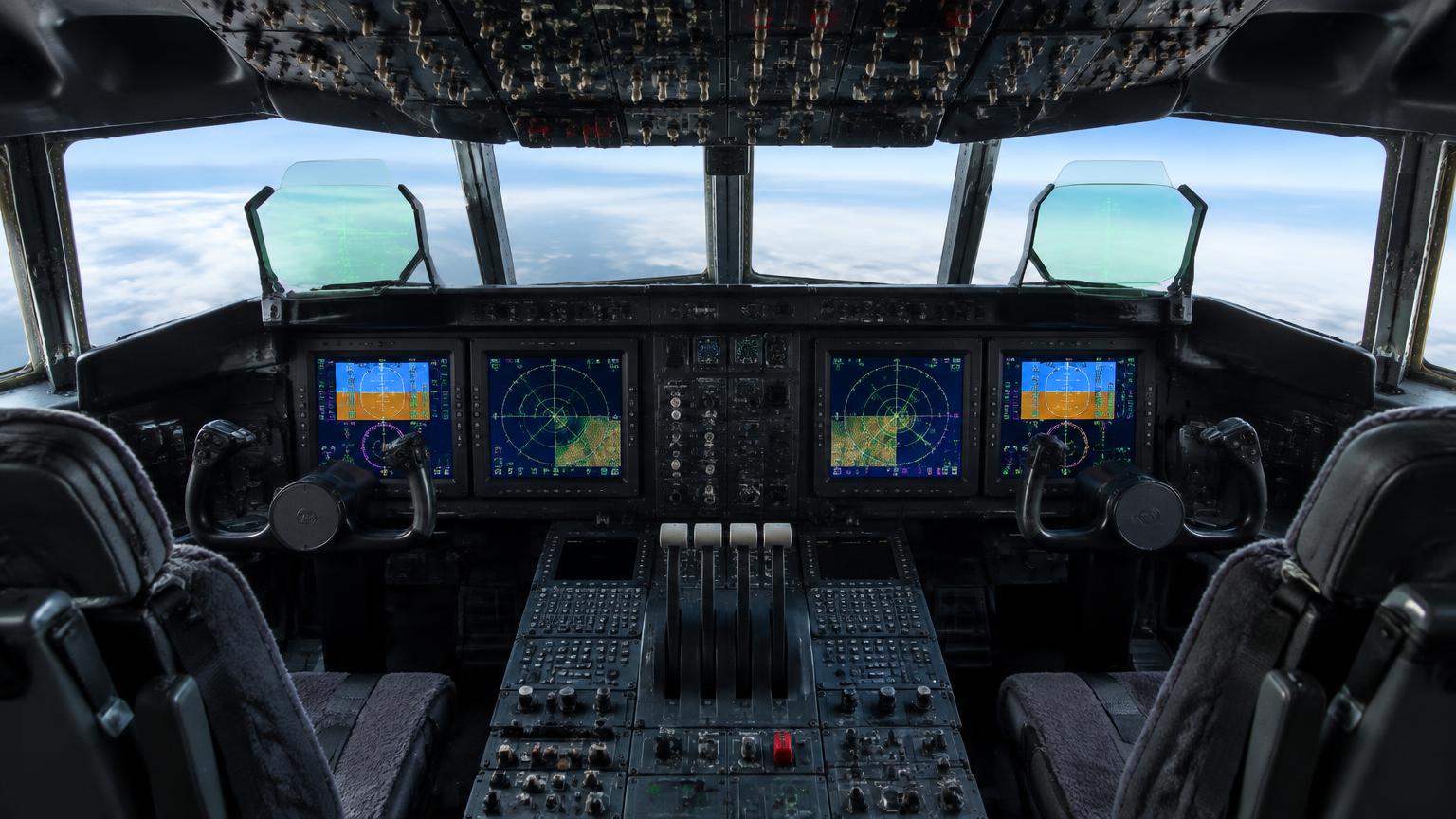
Two pilots fly from a glass cockpit with four colour displays and head-up displays (HUDs) that project flight data onto the windscreen, useful for low-level and tactical flying. A loadmaster in the back manages cargo, paratroops and the ramp.
Four turboprops, each driving a 6-blade propeller, give strong short-field performance; pilots use reverse propeller pitch rather than thrust reversers to slow down after landing.
Key things to know
Unlike a jet airliner, the C-130 is optimised for low-speed, low-altitude, rough-field flying rather than high-speed cruise. Its turboprop engines are more fuel-efficient at the speeds and altitudes it typically flies, and its robust systems are built to keep flying after battle damage or years of hard use on austere airfields.
A day in the life of a Hercules crew
A tactical airlift crew plans around the cargo and the destination airstrip as much as the weather: pallet weights and balance, the condition of an unpaved runway, and whether the mission needs an airdrop or a landing. The loadmaster supervises loading vehicles or pallets up the rear ramp, securing everything with chains and straps rated for crash loads.
A single C-130 crew might fly a cargo run into a forward airfield in the morning, a paratroop drop in the afternoon, and an aeromedical evacuation flight home with litters and medical attendants in the back — the same airframe reconfigured for each role.
Why a high wing and four engines
Mounting the wing above the fuselage keeps the four propellers well clear of dirt, mud and debris kicked up from rough airstrips, and leaves the cargo floor close to the ground for easy loading. Four engines instead of two give redundancy: the aircraft can keep flying and even maintain altitude after losing one engine, important when operating far from maintenance support.
The Rolls-Royce AE 2100D3 engines on the C-130J replaced the long-serving Allison T56 of earlier models, bringing FADEC control, better fuel efficiency and less noise, paired with new 6-blade composite propellers.
From the flight engineer's panel to the glass cockpit
Older C-130A through H models needed a flight engineer to manage engines and systems and a navigator to plan routes, giving a crew of four or five up front. The C-130J's glass cockpit, mission computers and automation let just two pilots do the same job, a major change in how the aircraft is flown and crewed.
Head-up displays (HUDs) project critical flight data onto the windscreen, so pilots can keep their eyes outside the aircraft during the low-level, tactical flying and airdrop work the Hercules is built for.
Famous roles and missions
C-130s have flown in nearly every major military operation since Vietnam, airdropped food and medicine after earthquakes and famines, fought wildfires using the MAFFS firefighting system, and served as gunships (AC-130) armed with cannons for close air support. The Blue Angels and Royal Air Force aerobatic teams have both used specially painted C-130s as support aircraft.
EDUCATIONAL USE ONLY. Content is summarised from manufacturer documentation for learning. It is not approved flight or maintenance data. Always use the current, aircraft-specific POH/AFM, FCOM, QRH, AMM and operator procedures.