Sections menu
Airbus A320ceo / neo · Start
About
A plain-language introduction, with no technical detail.
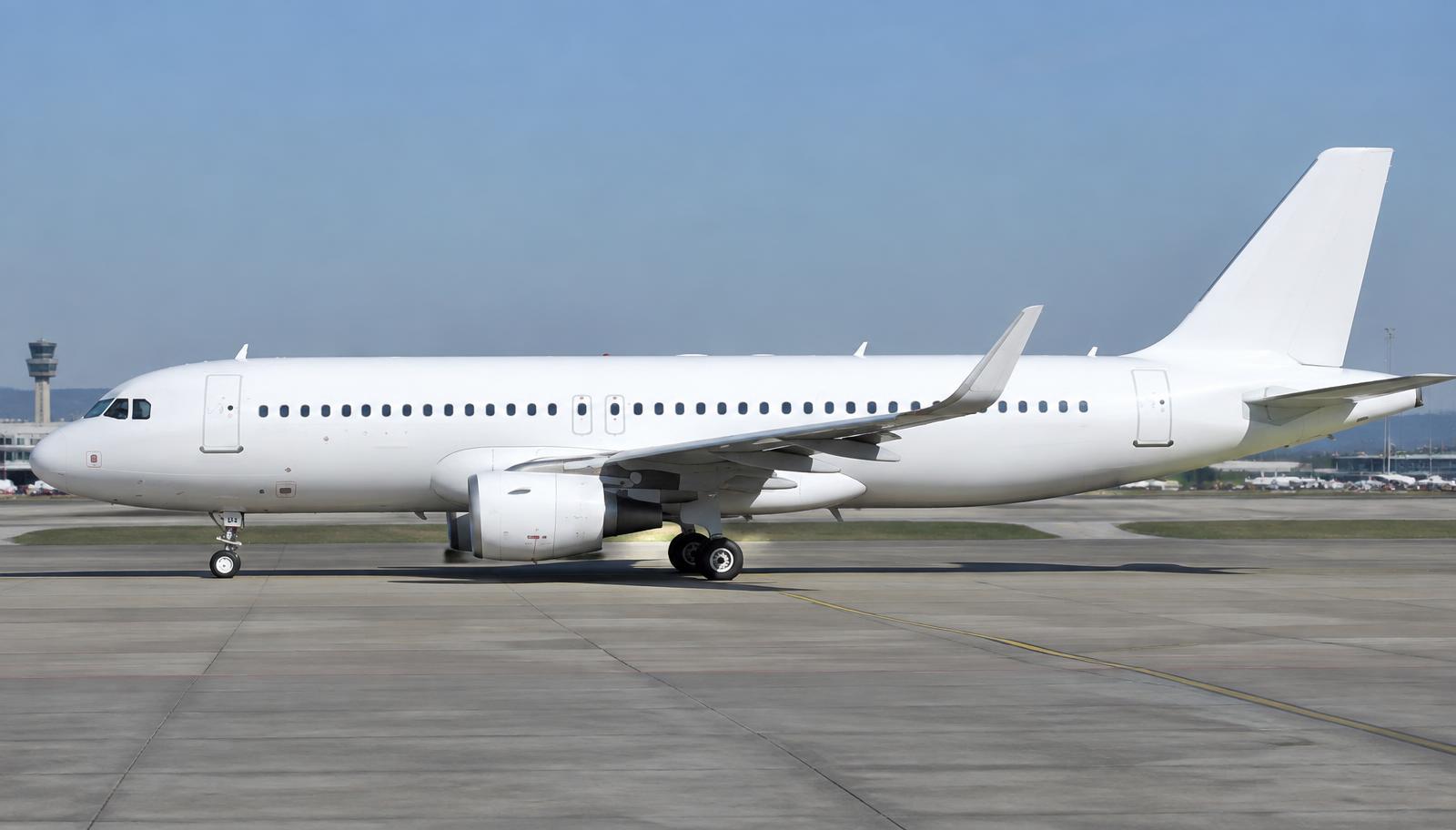
The Airbus A320 is a narrow-body twin-engine passenger jet and one of the two most common airliners in the world. It is the aircraft many people fly on for short and medium flights across Europe, Asia and the Americas.
What it is
A single-aisle jet with typically 150 to 180 seats, flying routes of up to about five to six hours, for example London to Cairo or New York to Los Angeles with the newer versions. It was first flown in 1987 and is built by Airbus in Toulouse, Hamburg, Tianjin and Mobile.
The family also includes the shorter A318 and A319 and the longer A321, which share the same cockpit and flying characteristics.
What made it special
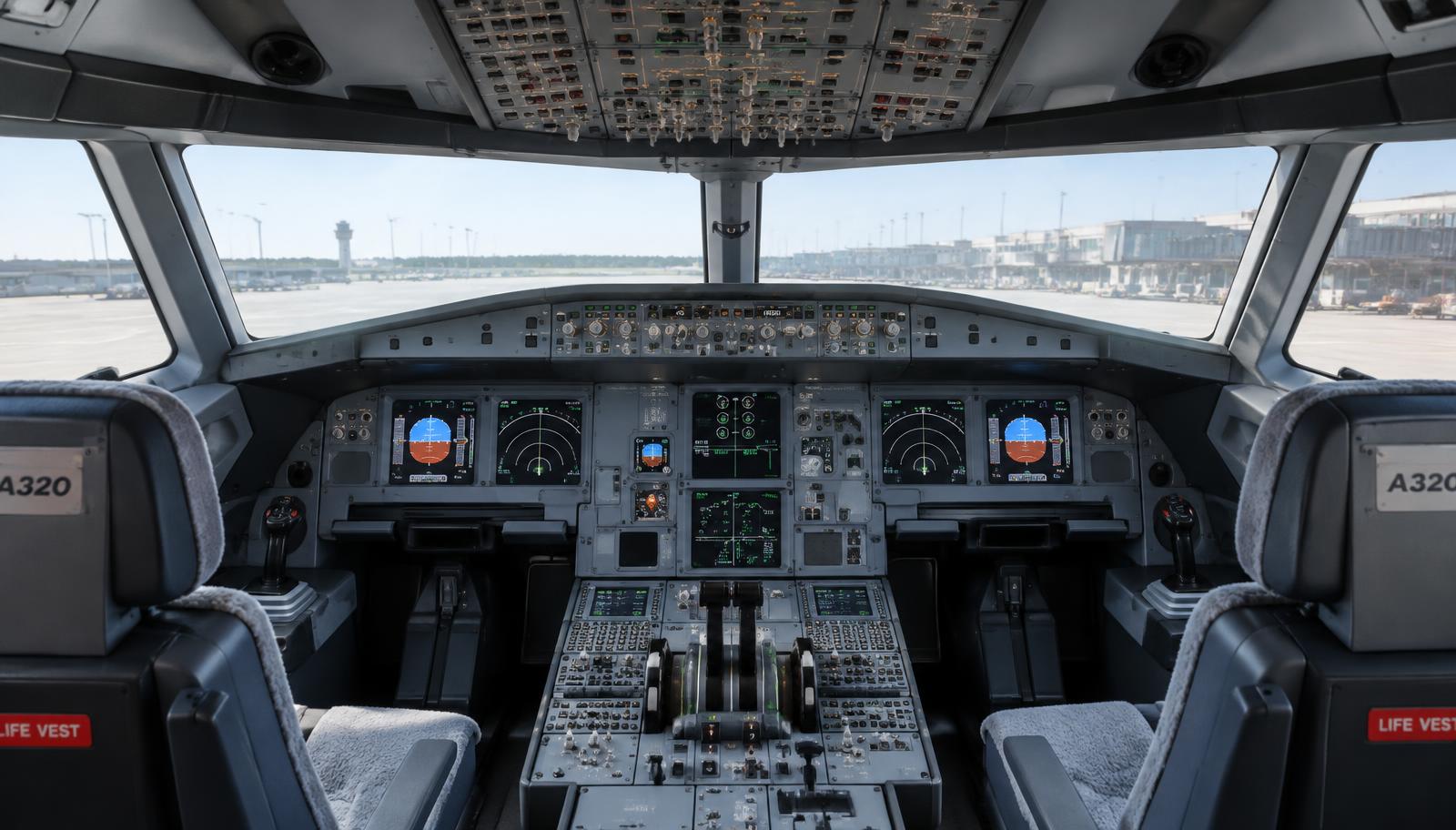
The A320 was the first airliner with a fully digital 'fly-by-wire' control system. The pilots do not move cables to the control surfaces. Instead they move a small sidestick, and computers decide how to move the surfaces, while also keeping the aircraft within safe limits.
Because all the aircraft in the family are flown in the same way, pilots can change between sizes with little extra training, which saves airlines money.
Who flies it
Low-cost carriers such as easyJet, IndiGo and Spirit and full-service airlines such as Lufthansa, Delta and Air France all use it. Thousands are in service and more than 10,000 have been delivered.
What it is like to fly
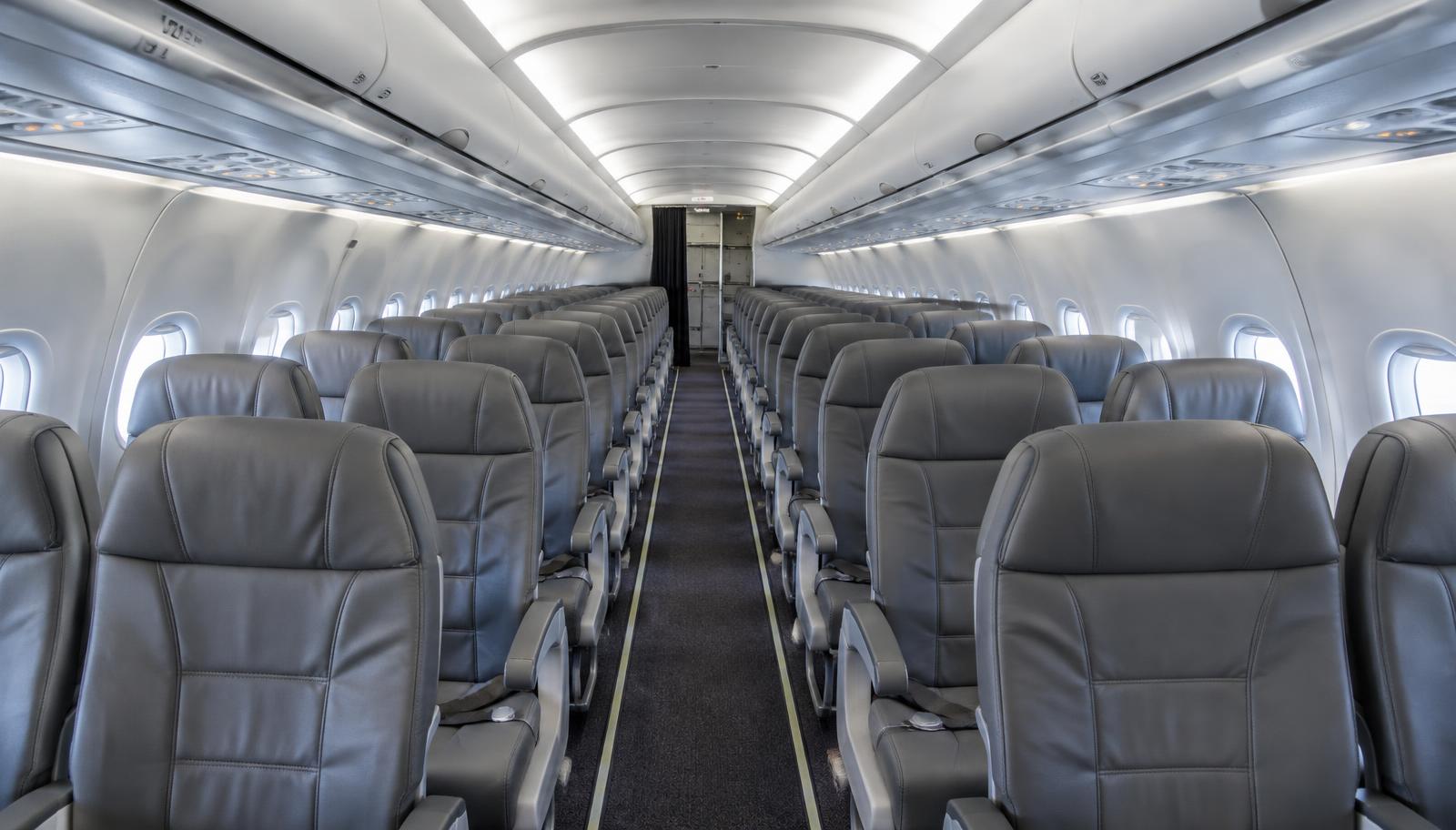
Two pilots sit side by side with a large screen in front of each. Much of a normal flight is handled by the autopilot and the flight computer, and the pilots programme the route and monitor. The cabin has six seats per row with a single aisle, with cargo in the belly hold under the floor.
The latest version
The A320neo ('new engine option') has larger, more efficient engines and curved wingtips called Sharklets. They cut fuel use by around 15 to 20 percent and make the aircraft quieter.
How Airbus came to be
In the 1970s, American manufacturers dominated the world airliner market. Airbus was formed as a European consortium — France, Germany, the United Kingdom and Spain working together — to compete. The A300 widebody came first; the A320 was Airbus's bold step into the busiest market of all, the single-aisle airliner.
Parts of every A320 are still built across Europe: wings in Britain, fuselage sections in Germany and France, tail parts in Spain. They are flown or shipped to final assembly lines in Toulouse, Hamburg, Tianjin (China) and Mobile (USA).
Flying by wire
The A320 was the first airliner to use fly-by-wire for all its main flight controls. When the pilot moves the sidestick, computers decide how to move the control surfaces. They also protect the aircraft: they will not let the pilot stall it, bank too steeply or pull too many g in normal operation.
Many pilots were sceptical in 1988. Today almost every new airliner uses fly-by-wire, and the idea of computer protections has become an accepted part of aviation safety.
A day in the life of an A320
A short-haul A320 can fly six to eight flights a day, with turnarounds as short as 25 to 30 minutes. While passengers leave, the cleaners, caterers, fuel truck and baggage handlers all work at once. Pilots check the aircraft, load the route into the flight computer and calculate takeoff speeds before the next group of passengers boards.
Overnight, mechanics carry out daily checks and fix small problems logged by the crew. Heavier checks, where the aircraft is opened up for weeks, happen every few years.
The Hudson River landing
On 15 January 2009, US Airways flight 1549 hit a flock of Canada geese shortly after takeoff from New York LaGuardia. Both engines lost thrust. Captain Chesley Sullenberger and First Officer Jeffrey Skiles glided the A320 to a landing on the Hudson River, and all 155 people on board survived. The calm teamwork of the crew, the cabin staff and the rescue boats made it one of the best-known events in aviation history.
The family today
The family includes the shorter A318 and A319, the A320 and the stretched A321. The A321XLR can fly more than 8,000 km, opening long thin routes such as smaller European cities to North America with a single-aisle aircraft. More than 10,000 have been delivered, and Airbus has large order books stretching into the 2030s.
EDUCATIONAL USE ONLY. Content is summarised from manufacturer documentation for learning. It is not approved flight or maintenance data. Always use the current, aircraft-specific POH/AFM, FCOM, QRH, AMM and operator procedures.