Sections menu
Airbus A320ceo / neo · Type data
Variants & history
Dimensions, development milestones and what changed between each version.
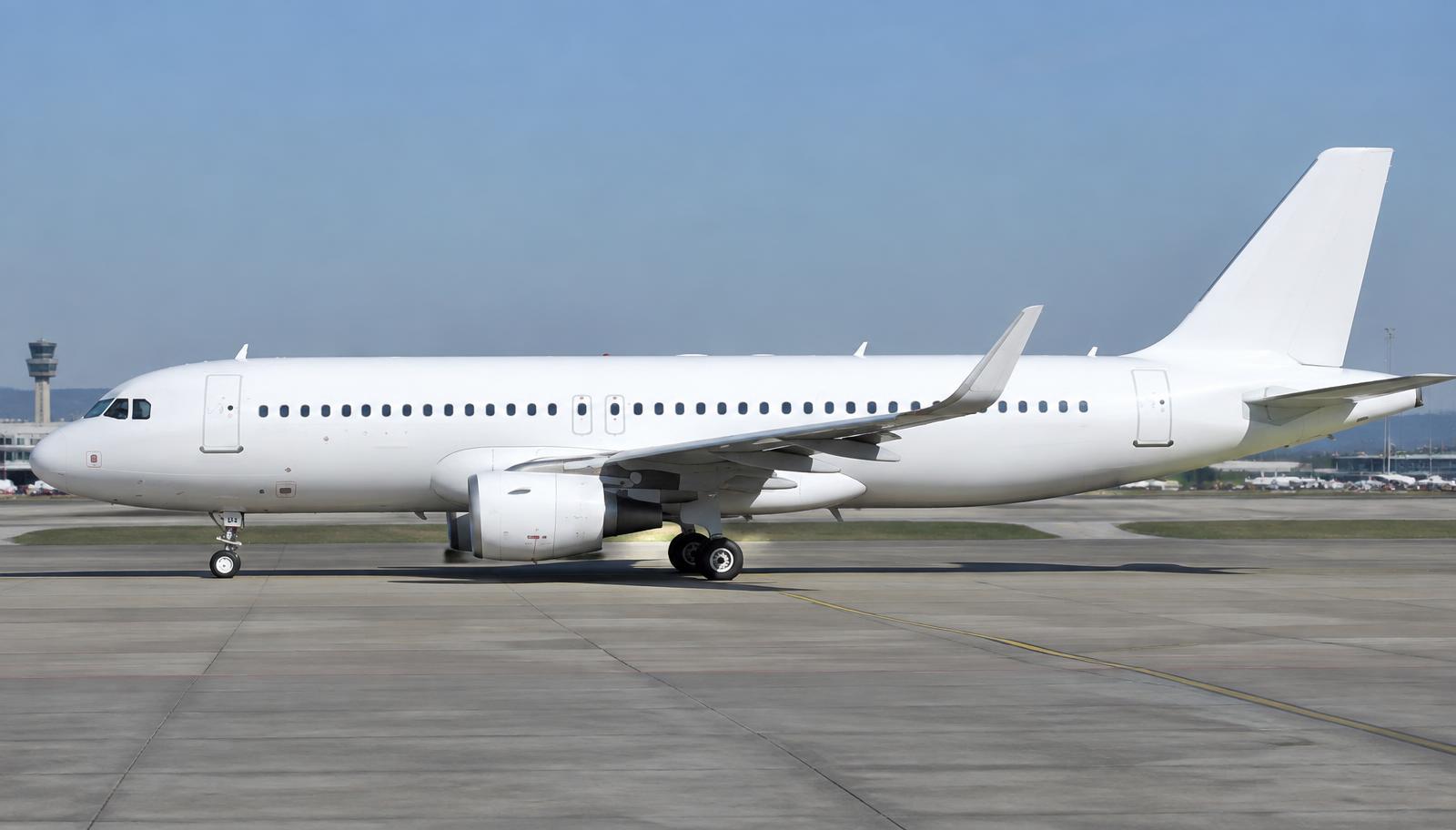
The A320 introduced digital fly-by-wire and sidestick control to civil airliners. The family (A318/A319/A320/A321) is among the best-selling jetliners ever.
A European bet
The A320 programme was launched in 1984 with support from European governments. Airbus needed an aircraft that would beat the Boeing 737 and McDonnell Douglas MD-80 on running costs. The team chose radical new technology: fly-by-wire, sidesticks, a glass cockpit and lighter composite materials in the tail.
First flight and entry into service
The A320 first flew on 22 February 1987 from Toulouse. Air France and British Airways took the first deliveries in 1988. A tragic accident at an air show in Habsheim in 1988 put the new technology under the spotlight, but the type built a strong safety record and orders grew steadily.
A family of sizes
Airbus quickly stretched and shrank the design: the longer A321 in 1994, the shorter A319 in 1996 and the smallest A318 in 2003. All share the same cockpit and type rating, so a pilot can fly any of them after a short course. Airlines could match aircraft size to each route without retraining crews.
The neo and beyond
In 2010 Airbus launched the A320neo ('new engine option') with the CFM LEAP-1A or Pratt & Whitney GTF engines and large 'Sharklet' wingtips, saving about 15–20% fuel. It became the fastest-selling airliner ever. The A321LR and A321XLR stretch its range far enough to cross the Atlantic.
✓ Verified official data
From the type-certificate data sheet
These figures are checked against free, public documents from the FAA and EASA. Click a source to open it.
| Item | Official value | Source |
|---|---|---|
| Type certificate | EASA.A.064 (A318/A319/A320/A321 single-aisle family) | EASA — Type-Certificate Data Sheet EASA.A.064 (A318/A319/A320/A321) |
| Approved engines (A320) | CFM56-5A / -5B, IAE V2500-A5 (ceo); CFM LEAP-1A, PW1100G-JM (neo) | EASA — Type-Certificate Data Sheet EASA.A.064 (A318/A319/A320/A321) |
| Max operating speed (VMO) | 350 KIAS | EASA — Type-Certificate Data Sheet EASA.A.064 (A318/A319/A320/A321) |
| Max operating Mach (MMO) | M0.82 | EASA — Type-Certificate Data Sheet EASA.A.064 (A318/A319/A320/A321) |
| Max operating altitude | 39,100 ft (ceo) / 39,800 ft (neo)Check the AFM for your weight variant | EASA — Type-Certificate Data Sheet EASA.A.064 (A318/A319/A320/A321) |
| Max takeoff weight (A320) | Up to 79,000 kg depending on weight variant | EASA — Type-Certificate Data Sheet EASA.A.064 (A318/A319/A320/A321) |
| Minimum flight crew | 2 (pilot and co-pilot) | EASA — Type-Certificate Data Sheet EASA.A.064 (A318/A319/A320/A321) |
Dimensions & data
| Length | 37.57 m |
| Wingspan | 35.80 m (ceo, sharklets) / 34.10 m without |
| Height | 11.76 m |
| Fuselage width | 3.95 m |
| MTOW | 73.5–79 t✓ EASA |
| Typical seats | 150–180 |
| Range | approx. 3,300 nm (neo) |
| Max operating Mach | M0.82✓ EASA |
| Ceiling | 39,100 ft (ceo) / 39,800 ft (neo)✓ EASA |
Timeline
- 1984
Programme launch.
- 1984
Programme launch
- 1987
First flight, 22 February.
- 1988
Entry into service with Air France.
- 1993
A321 enters service.
- 1996
A319.
- 2003
A318.
- 2009
US Airways 1549 lands on the Hudson
- 2012
Sharklets introduced.
- 2016
A320neo enters service with Lufthansa.
- 2019
A321XLR launched.
- 2019
A321XLR launched at the Paris Air Show
- 2023
A320 family deliveries pass 10,000 aircraft
Variants
| Variant | Years | Engine | Key differences |
|---|---|---|---|
| A320-100 | 1988 | CFM56-5A | Initial version, wingtip fences, no centre tank option. |
| A320-200 (ceo) | 1988–present | CFM56-5A/5B or IAE V2500-A5 | Centre tank, higher MTOW. |
| A320neo | 2016–present | CFM LEAP-1A or PW1100G GTF | approx. 15–20% lower fuel burn, sharklets standard. |
| A319 / A321 | 1996 / 1994 | Same families | Shorter / stretched; common type rating. |
Approximate figures — verify against the type certificate data sheet and manufacturer data.
EDUCATIONAL USE ONLY. Content is summarised from manufacturer documentation for learning. It is not approved flight or maintenance data. Always use the current, aircraft-specific POH/AFM, FCOM, QRH, AMM and operator procedures.