Sections menu
Airbus H145 (BK117 D-2) · Start
About
A plain-language introduction, with no technical detail.
The Airbus H145 is a twin-engine light helicopter best known as the backbone of air ambulance (HEMS) fleets around the world, also flown for police, offshore and utility work.
What it is
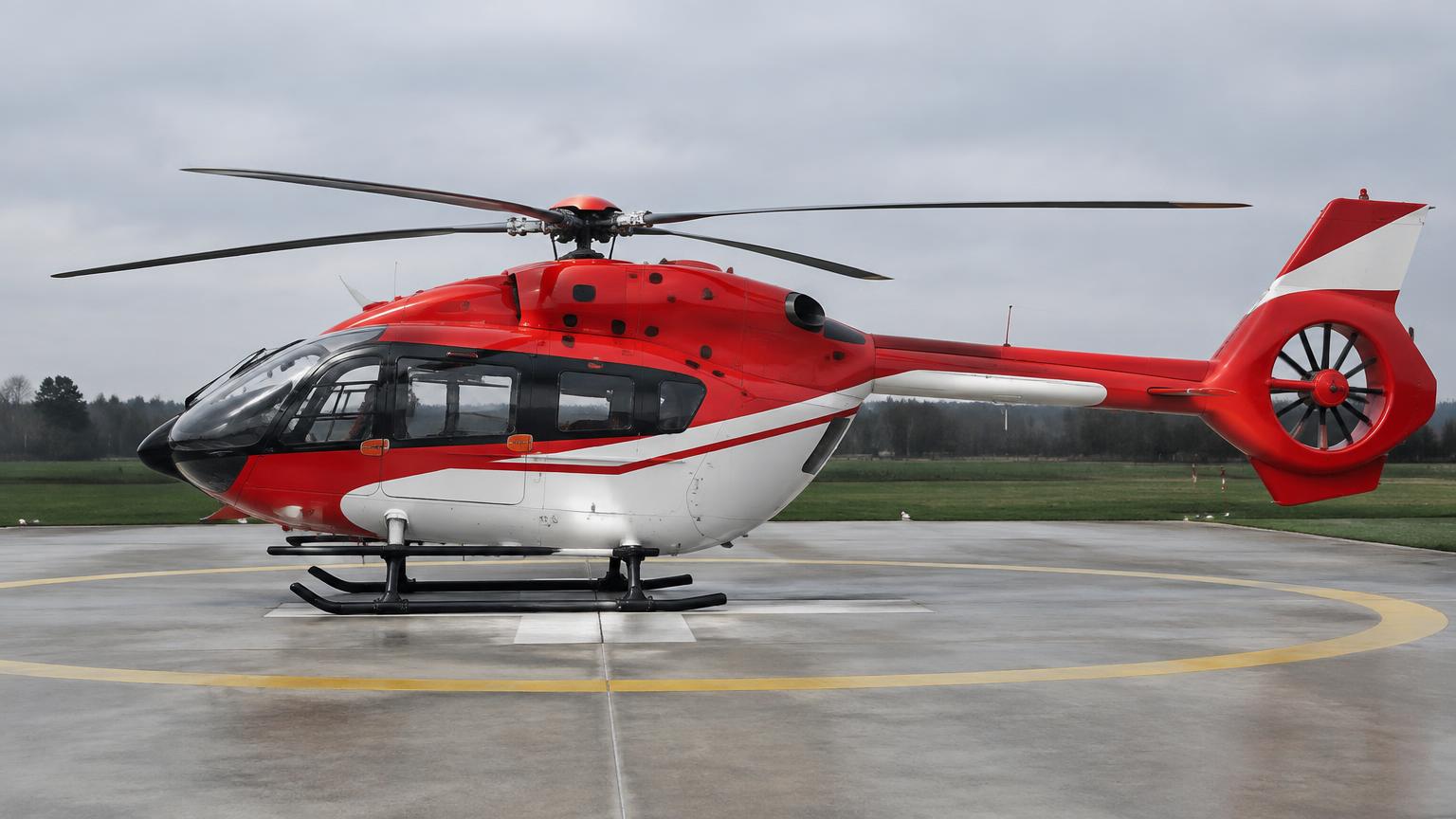
A twin-engine helicopter carrying a pilot plus up to around eight passengers or a medical crew with a stretcher. It has two turboshaft engines for safety, a four- or five-bladed main rotor overhead, and a shrouded tail fan called a Fenestron instead of an exposed tail rotor.
It is built by Airbus Helicopters (formerly Eurocopter) in Germany, and is the latest evolution of the long-running BK117 family that began in the 1970s as a joint German-Japanese design.
Why it is so widely used
Two engines mean the helicopter can keep flying, climb away or land safely if one engine fails — important when flying over cities, hospitals or offshore platforms. The glass cockpit (Helionix) and autopilot reduce pilot workload so a single pilot can fly safely even at night or in poor weather with the right training.
Its skid landing gear and compact size let it land in small spaces: a hospital helipad, a road, or a tight clearing — something a fixed-wing aircraft cannot do.
What it is used for
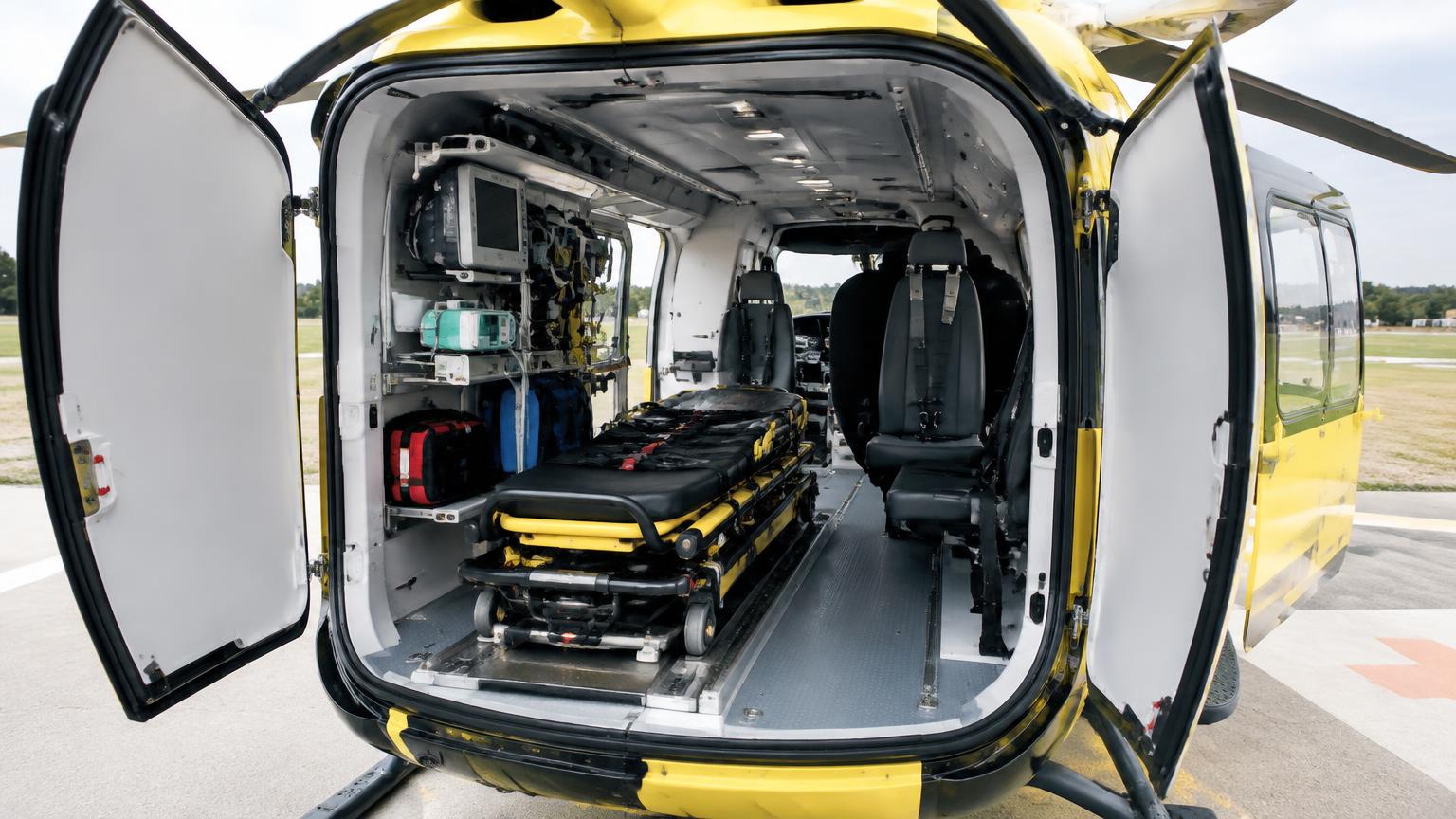
The most visible role is Helicopter Emergency Medical Services (HEMS): flying critically injured or ill patients to hospital faster than a road ambulance could manage. It is also used for police observation, offshore crew transfer to platforms and wind farms, mountain and search-and-rescue work, VIP transport, and in a militarised form (H145M) for utility and light attack duties; the US Army's UH-72 Lakota is a close relative.
What it is like to fly
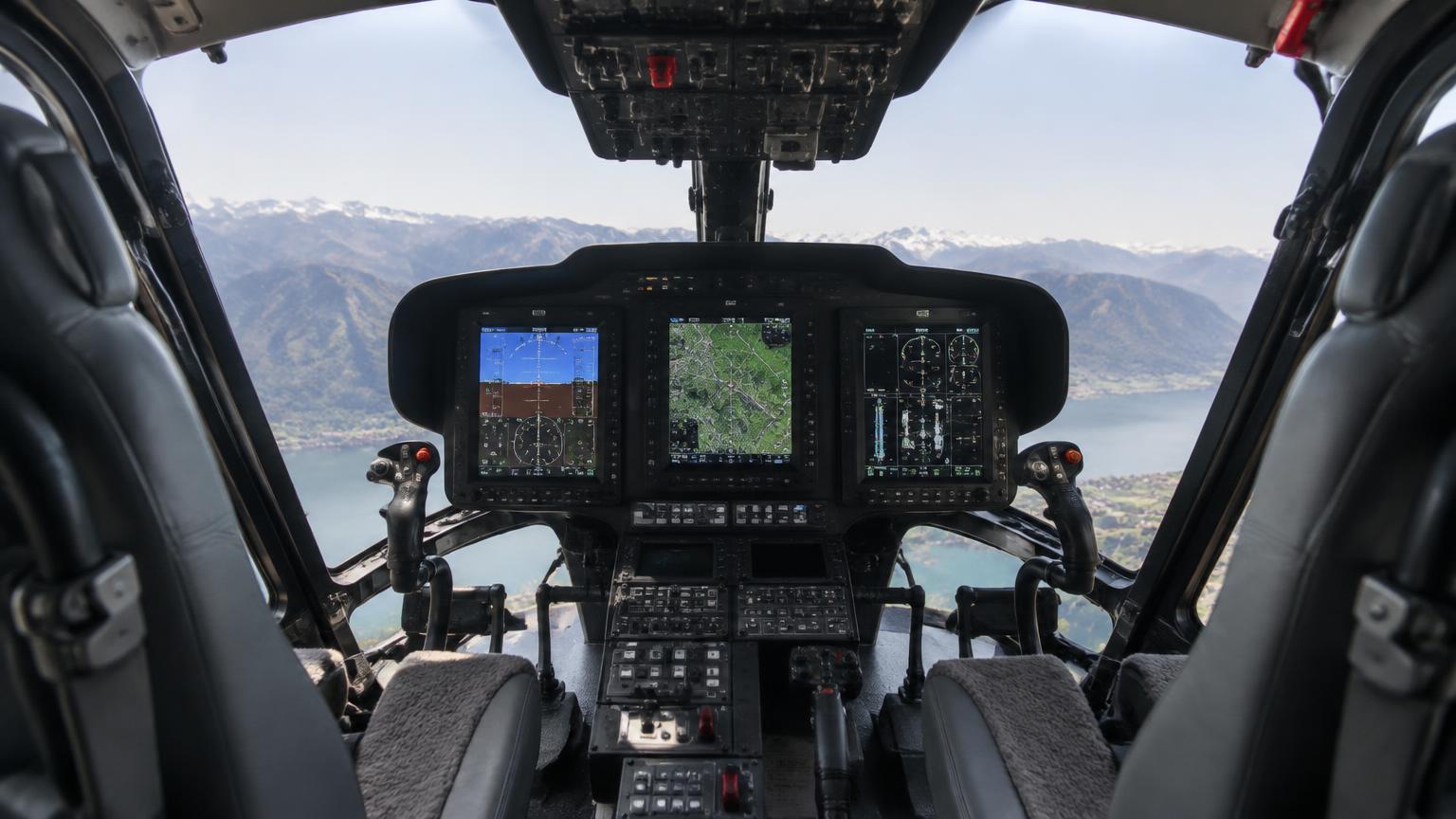
The pilot sits with a cyclic stick between the knees (for tilting the rotor disc and moving forward, backward and sideways), a collective lever at the left hand (for raising and lowering overall lift) with a throttle built in, and pedals for the feet (to control the tail rotor and point the nose).
Hovering demands constant small corrections with all three controls at once — it is widely considered one of the hardest basic skills in aviation, unlike holding straight and level in an aeroplane. Glass displays, an autopilot with hover-hold, and simplified engine instruments (the First Limit Indicator) help manage the workload.
Key things to know
Unlike an airliner it has no wings for lift — the spinning rotor blades generate lift, and if both engines fail the pilot must lower the collective quickly and glide the rotor down in autorotation rather than falling like a dropped object. It cannot fly as fast or as high as an aeroplane, but it can take off and land almost anywhere, which is exactly why hospitals, police forces and offshore operators choose it.
A day in the life of an air ambulance H145
A HEMS crew starts the day with a thorough walk-around and a check of the medical kit — stretcher, oxygen, monitors and drugs — followed by a weather and performance brief for the area they cover. Many bases keep the aircraft ready to launch within a few minutes of a call, day or night.
A typical mission might be a road traffic collision, a cardiac emergency in a remote area, or an inter-hospital transfer of a critically ill patient. The crew often lands in places never designed for helicopters: a field, a road junction or a hospital rooftop pad, relying on the pilot's judgement and the aircraft's compact size and skid gear.
From BK117 to H145
The H145's story starts with the BK117, developed jointly in the 1970s by Kawasaki of Japan and MBB of Germany (later part of Eurocopter, then Airbus Helicopters). Each new generation — BK117 C-1, C-2 (sold as EC145), and finally the D-2 and D-3 that carry the H145 name — kept the same rugged airframe concept while modernising engines, rotor and avionics.
This continuity matters for operators: decades of operational experience and a huge parts and training base carry forward even as the aircraft becomes dramatically more capable.
Why two engines and a shrouded tail fan
Flying over a city, a hospital, or far out to an offshore platform, there is often nowhere to make a safe forced landing if an engine fails — so the H145 carries two independent turboshaft engines, each able to keep the helicopter flying alone for the time it takes to reach a safe landing spot.
The Fenestron, a tail rotor enclosed in a ducted fan built into the tail fin, is quieter and safer for ground crews working close to the tail than an exposed spinning tail rotor, which matters a great deal when paramedics and stretcher-bearers are moving around a running aircraft.
Learning to hover
New helicopter pilots usually find hovering the hardest skill to learn, because the cyclic, collective and pedals all affect each other and must be corrected together and continuously. Where an aeroplane pilot can trim the controls and let go for a moment, a helicopter pilot in the hover is always making tiny corrections.
Once mastered, the reward is the helicopter's unique ability: it can stop in mid-air, back up, turn on the spot, and land in a space barely larger than itself — exactly the skill that makes rescue and medical missions possible.
EDUCATIONAL USE ONLY. Content is summarised from manufacturer documentation for learning. It is not approved flight or maintenance data. Always use the current, aircraft-specific POH/AFM, FCOM, QRH, AMM and operator procedures.