Sections menu
Cessna 172S Skyhawk · Start
About
A plain-language introduction, with no technical detail.
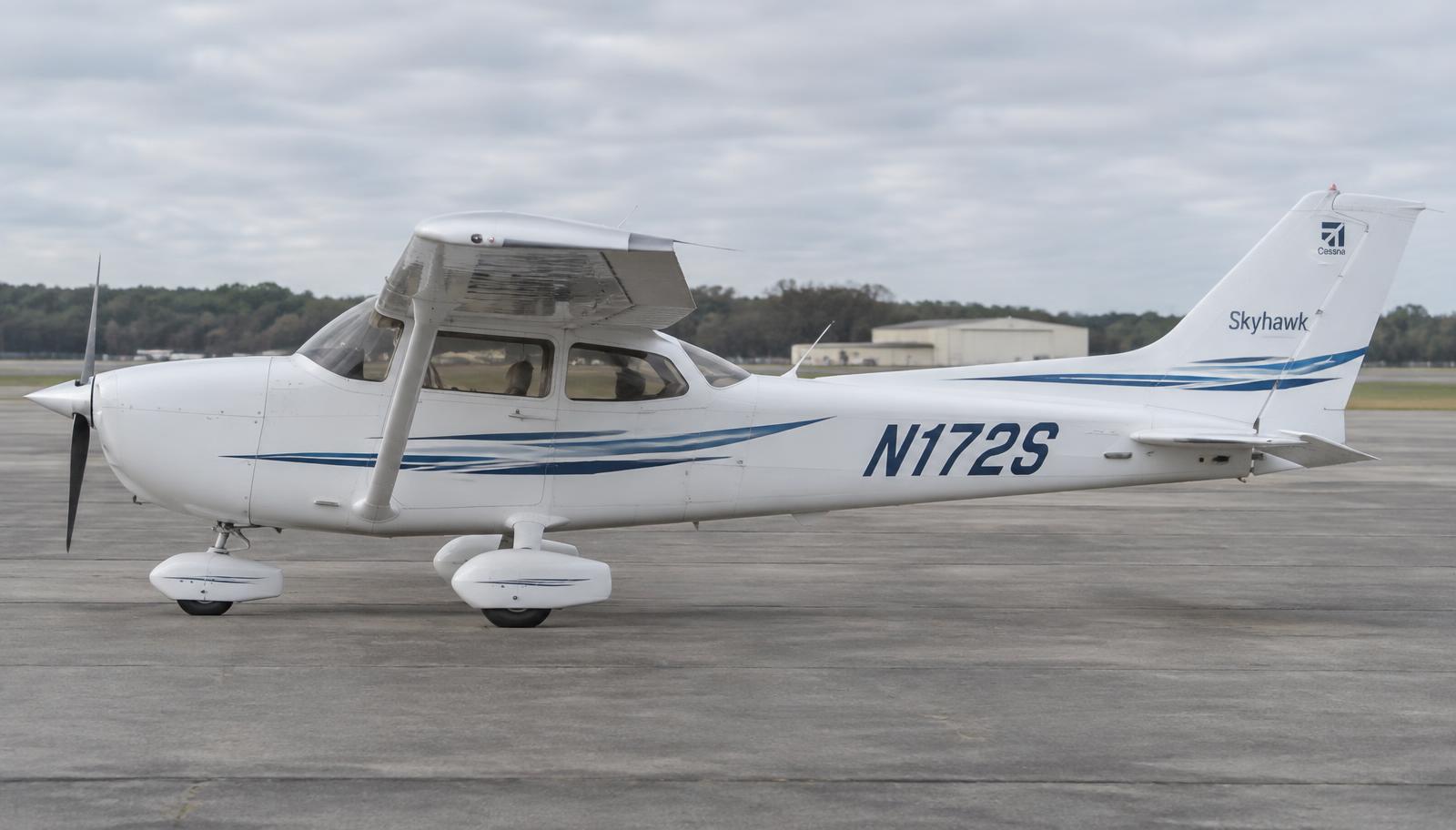
The Cessna 172 Skyhawk is the most widely built aircraft in history and the aircraft in which millions of people have learned to fly.
What it is
A small, four-seat, single-engine aeroplane with the wing mounted above the cabin. It flies at about the speed of a fast car on a motorway in the sky, around 120 knots, and carries two to four people for a couple of hours at a time.
It is built by Cessna, today part of Textron Aviation, and has been in production since 1956 with only a short pause. More than 44,000 have been built.
Why it is so popular
It is forgiving. It is stable, slow to stall, easy to land, and its engine and systems are simple. That makes it the standard training aircraft at flight schools around the world.
Because parts and mechanics are available nearly everywhere, it is also cheap to keep flying, which is why clubs and private owners like it too.
What it is used for
Most flights are training: circuits around the airport, navigation exercises to nearby airfields and the first solo flights. Others are used for sightseeing, banner towing, aerial photography, patrol flights and weekend trips with family or friends.
What it is like to fly
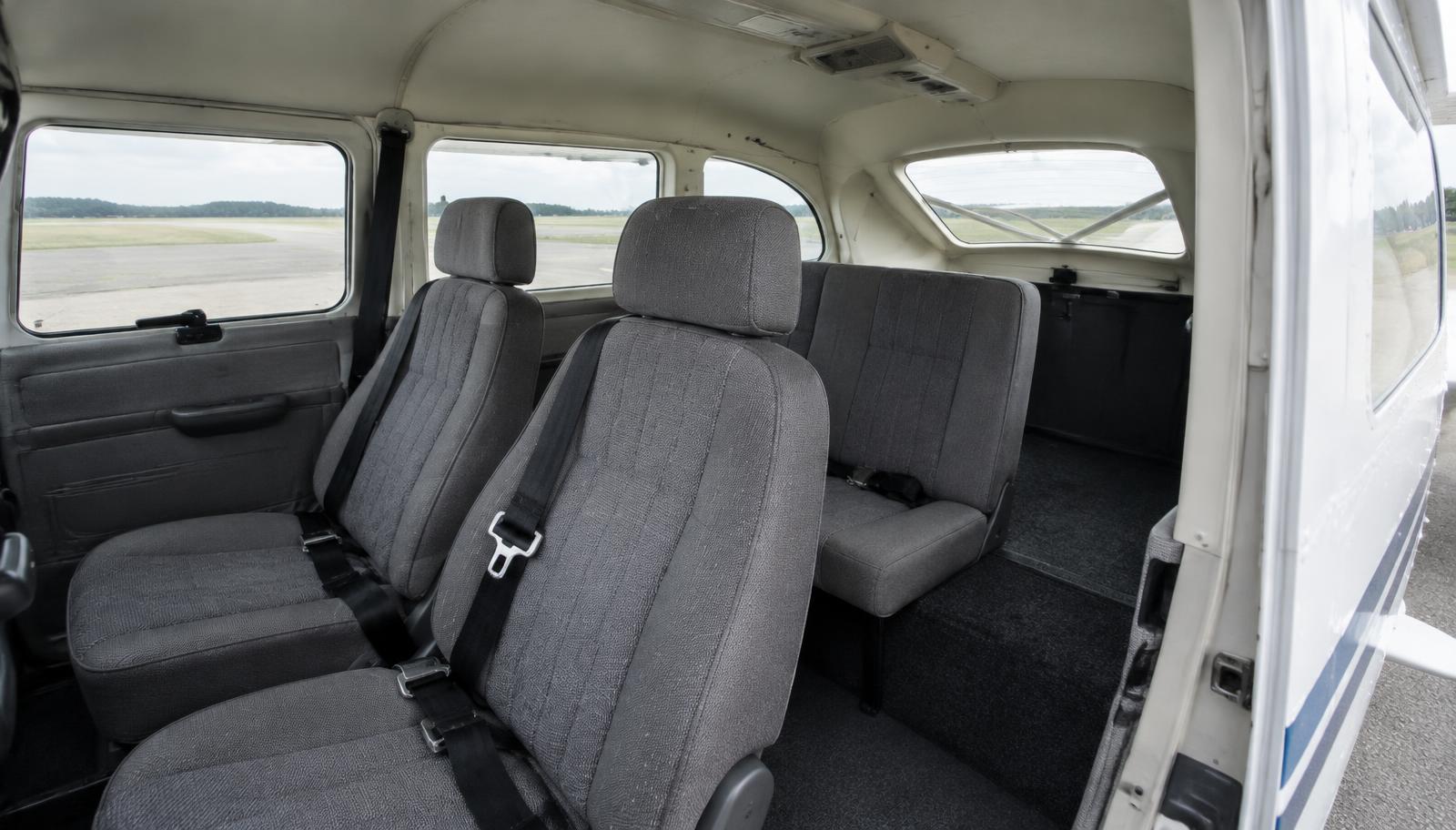
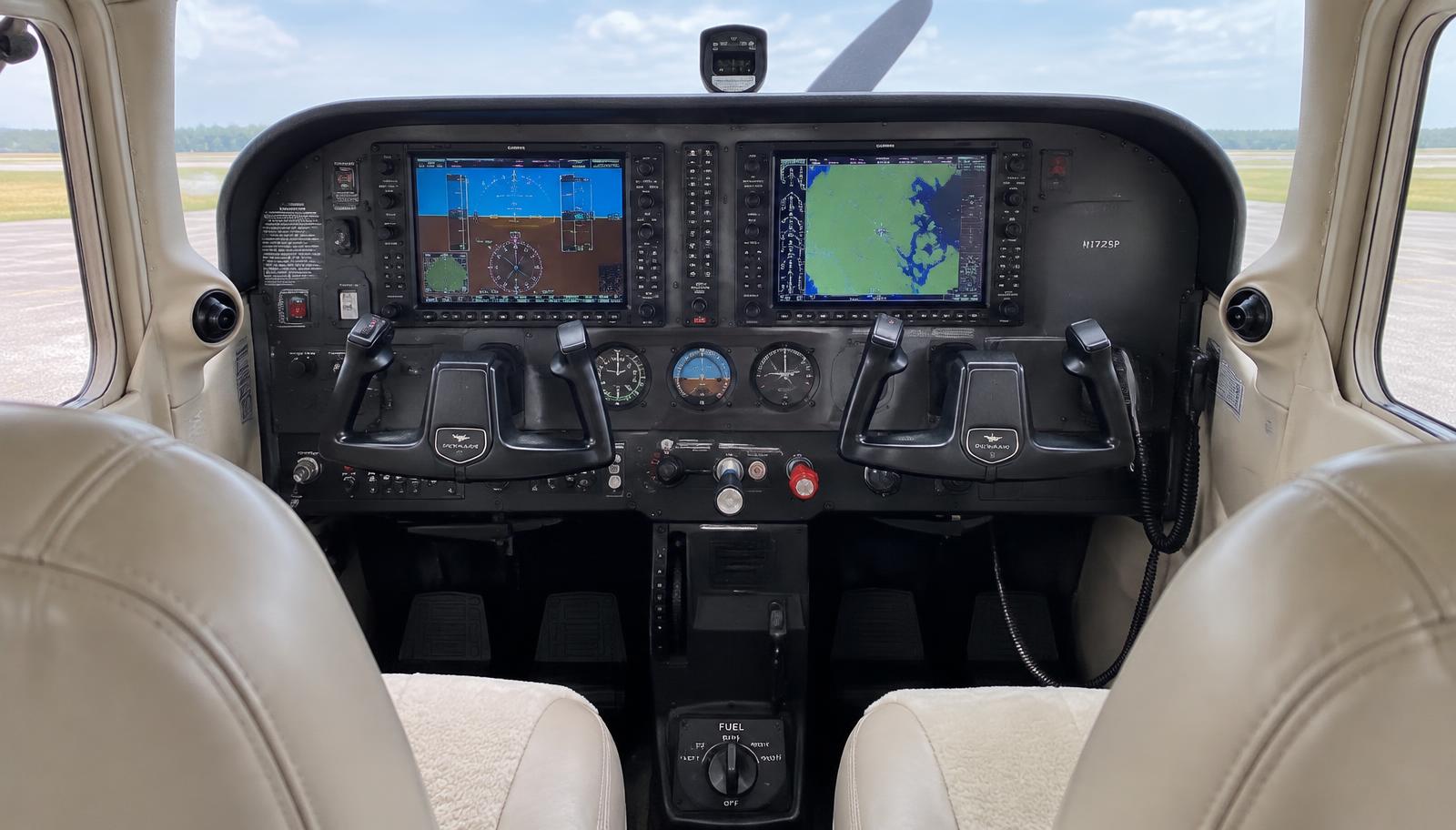
The pilot sits on the left, next to a passenger, with two more seats behind. The controls are a yoke, rudder pedals, a throttle and a mixture lever. Modern aircraft have glass screens (the Garmin G1000), older ones have round dials.
The cabin is small and loud, the view is excellent thanks to the high wing and large windows, and it flies in good weather using visual references outside, with instruments added when training for cloud flying.
Key things to know
Its piston engine runs on aviation petrol and drives a propeller. It can take off and land on short grass strips, but it is limited by weather, wind and weight. It cannot fly high or fast enough to get above bad weather, so pilots plan flights around the forecast.
A day in the life of a Skyhawk
A typical flight-school 172 starts its day before sunrise. A student walks around it with a checklist, drains a few drops of fuel from each tank to look for water, checks the oil with a dipstick and wiggles the control surfaces. By the end of the day the same aircraft may have flown six or seven lessons — circuits, practice forced landings, a short cross-country to a nearby airfield — and burned about 30 litres of fuel per hour of flying.
Many school aircraft fly 600 to 1,000 hours a year. Every 100 hours they go into the hangar for an inspection, where mechanics open panels, check the engine, change the oil and look for cracks and corrosion. With this care, 172s built in the 1970s are still flying lessons every day.
Why the wing is on top
The high wing is one of the reasons the 172 is so friendly. It gives a clear view of the ground below — ideal for learning to navigate by landmarks and for sightseeing — and it shades the cabin on a sunny day. Fuel sits in the wings above the engine, so it can flow down by gravity without needing pumps.
The downside is that the wing blocks the view upward in a turn. Pilots learn to lift the wing slightly and look before turning, a habit that stays with them for the rest of their flying.
Famous flights
In 1958–59, Robert Timm and John Cook kept a Cessna 172 in the air for 64 days, 22 hours and 19 minutes over the Nevada desert, refuelling from a speeding truck below. The record has never been beaten.
In 1987, a young German pilot, Mathias Rust, flew a rented Cessna 172 from Finland through Soviet air defences and landed next to Red Square in Moscow — an event that embarrassed the Soviet military and led to the firing of senior commanders.
Running costs and ownership
A used 172 can cost about as much as a new family car or a small house, depending on age and equipment. Owners pay for fuel, insurance, hangar or parking, annual inspections and an engine overhaul fund — the engine is normally overhauled every 2,000 hours. Many owners share an aircraft in a syndicate or flying club to split these costs.
Because it is so common, parts are easy to find and almost every mechanic knows the type. This keeps the 172 cheaper to own than rarer aircraft of the same size.
From first lesson to licence
Most students make their first solo flight in a 172 after about 15 to 25 hours of instruction. A private pilot licence needs at least 40 to 45 hours of flying, including solo cross-country flights, followed by a written exam and a flight test with an examiner. Many airline pilots flying the A320 or 737 today started their careers in exactly this aircraft.
EDUCATIONAL USE ONLY. Content is summarised from manufacturer documentation for learning. It is not approved flight or maintenance data. Always use the current, aircraft-specific POH/AFM, FCOM, QRH, AMM and operator procedures.