Accident pattern · C172 (carburettor models, pre-1997 and 172N/P)
Carburettor icing — power loss in cruise or descent
Report: NTSB accident database / FAA SAIB CE-09-35
Where it is

Engine fuel & control
What it looks like
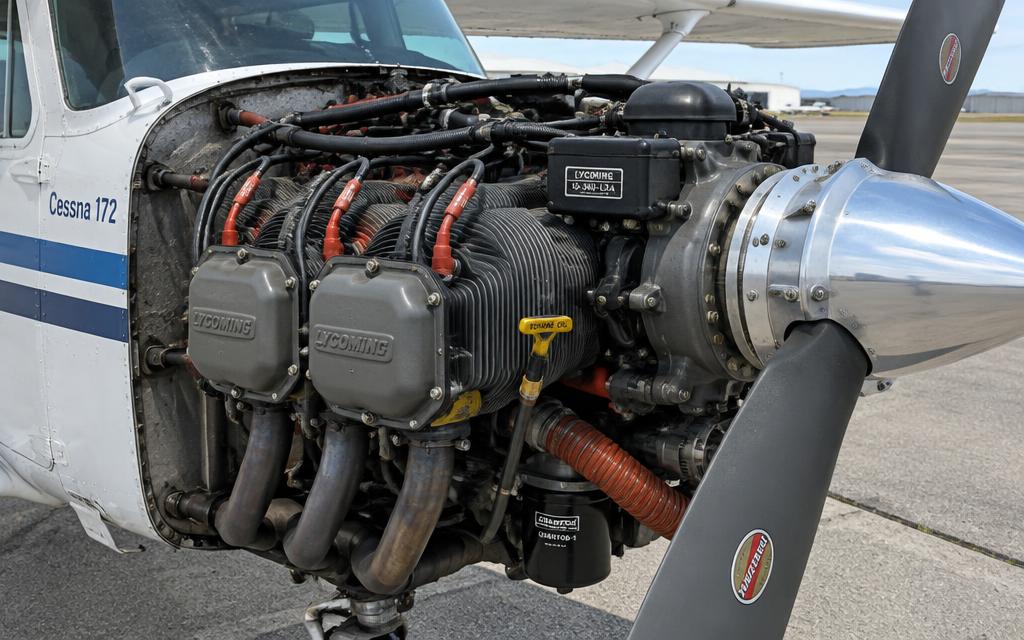
What happened
A gradual RPM drop goes unnoticed or is mistaken for something else; the engine runs rough and stops, usually during a long low-power descent in humid air.
Chain of causes
- 1Fuel evaporation and venturi pressure drop cool the carburettor throat by up to ~30 °C
- 2Icing is possible at outside air temperatures well above freezing when humidity is high
- 3Low throttle settings make serious icing more likely and engine heat is reduced
- 4Carb heat applied late — the engine no longer has enough heat to melt the ice
Lessons
- Treat any unexplained RPM drop as carb ice: FULL carb heat at once
- Expect a further drop and roughness as ice melts — leave carb heat on
- Use carb heat before reducing power for descent, and clear the engine periodically
- Fuel-injected C172R/S models do not have this risk; they have alternate air instead
What changed afterwards
FAA Special Airworthiness Information Bulletin CE-09-35 and the carb-ice probability chart are now standard training material.